
How does losing weight improve your health?
See the benefits of losing even 5% of your body weight
We have detected that you are located in . Do you want to switch to the local site?


Obesity is a disease that develops when there's an excess amount of body fat that affects your health and can increase your risk of long-term medical conditions such as:
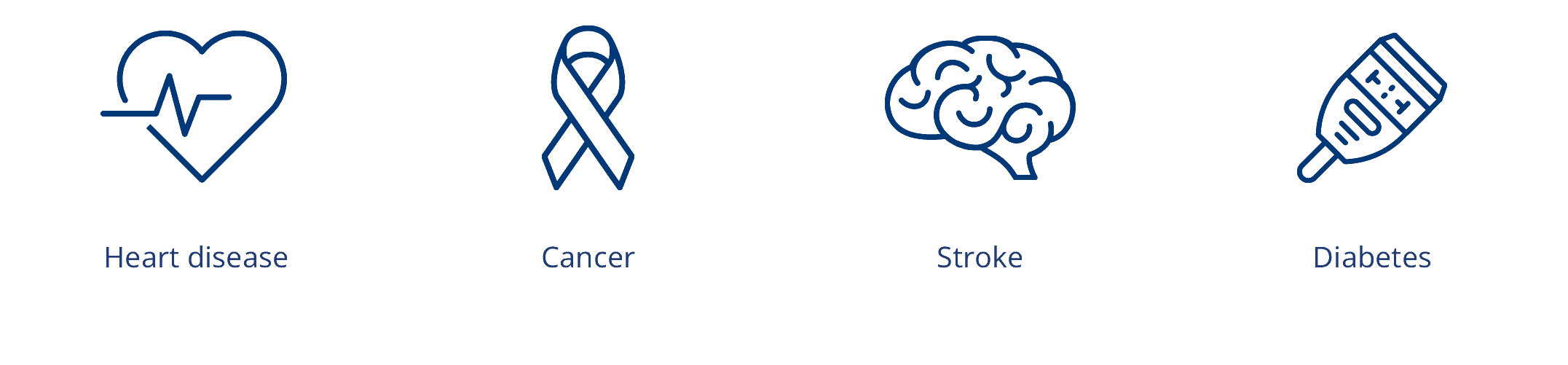
Obesity is a progressive disease, which means that it requires long-term management. With support and guidance, obesity is manageable.
To find out if you're living with obesity and to get a formal obesity diagnosis, it's important to talk to your healthcare professional. One simple way to screen for obesity is to calculate your body mass index (BMI).
BMI classifies underweight, overweight and obesity in adults based on their height and weight. Here you can see the BMI classifications
| BMI Classification | Underweight: Below 18.5 kg/m² |
| Normal: 18.5 to 24.9 kg/m² | |
| Overweight: 25.0 to 29.9 kg/m² | |
| Obesity Class I: 30.0 to 34.9 kg/m² | |
| Obesity Class II: 35.0 to 39.9 kg/m² | |
| Obesity Class III: 40.0 to 49.9 kg/m² | |
| Obesity Class IV: 50.0 to 59.9 kg/m² | |
| Obesity Class V: Above 60 kg/m² |
Cut-offs are different for people of South-, Southeast- or East Asian descent.
Remember, BMI should only be used as an obesity screening tool. Together with other clinical tests, BMI can be used to identify people who may benefit from obesity management.
Although BMI has traditionally been used to measure excess weight, and is used in the current definitions of obesity, the Commission highlighted one of its major weaknesses—BMI does not reflect body fat distribution.
As BMI does not differentiate between fat mass & lean mass, some people can have a normal or borderline overweight BMI score, despite living with excess body fat. In some cases, this could lead to a missed diagnosis of obesity and cause their health risk to go unnoticed.
The same problem can also be seen at the opposite end of the scale—some people living with high muscle mass but healthy levels of body fat, such as athletes, tend to have a higher BMI score. In some cases, this can lead them to be incorrectly classified as living with obesity.
This goes to show that although BMI is a valuable screening tool, indication of excess body fat, using tools such as Waist-to-Height Ratio, Waist Circumference, and Waist-to-Hip Ratio can contribute to a better identification and diagnosis of obesity. To find out your Waist-to-Height Ratio, use our calculator provided below.
BMI can only screen for obesity, it can’t measure body fat distribution which may indicate one's risk of heart related conditions. For that you need to calculate your Waist-to-Height Ratio.
The symptoms of obesity go beyond excess body fat. If you're living with obesity, you may experience a variety of common symptoms. These can include:
If these symptoms sound familiar, it may be a good idea to talk to your healthcare professional. Understanding obesity and available treatments can help manage your weight.
See the benefits of losing even 5% of your body weight
Body mass index (BMI) is an important measurement when it comes to understanding your weight. While it should not be used to diagnose obesity, it can be used as a screening tool to classify your weight.