Tiredness or weakness
We have detected that you are located in . Do you want to switch to the local site?
Your liver plays a big role in your overall health. Extra weight can have a big impact on it.
Fatty liver disease happens when fat builds up in your liver. Over time, too much fat can affect how your liver works, and in more serious cases, cause scarring or liver failure.

Obesity is the #1 risk factor for MASLD. If you're carrying extra fat, your liver may start storing it too.
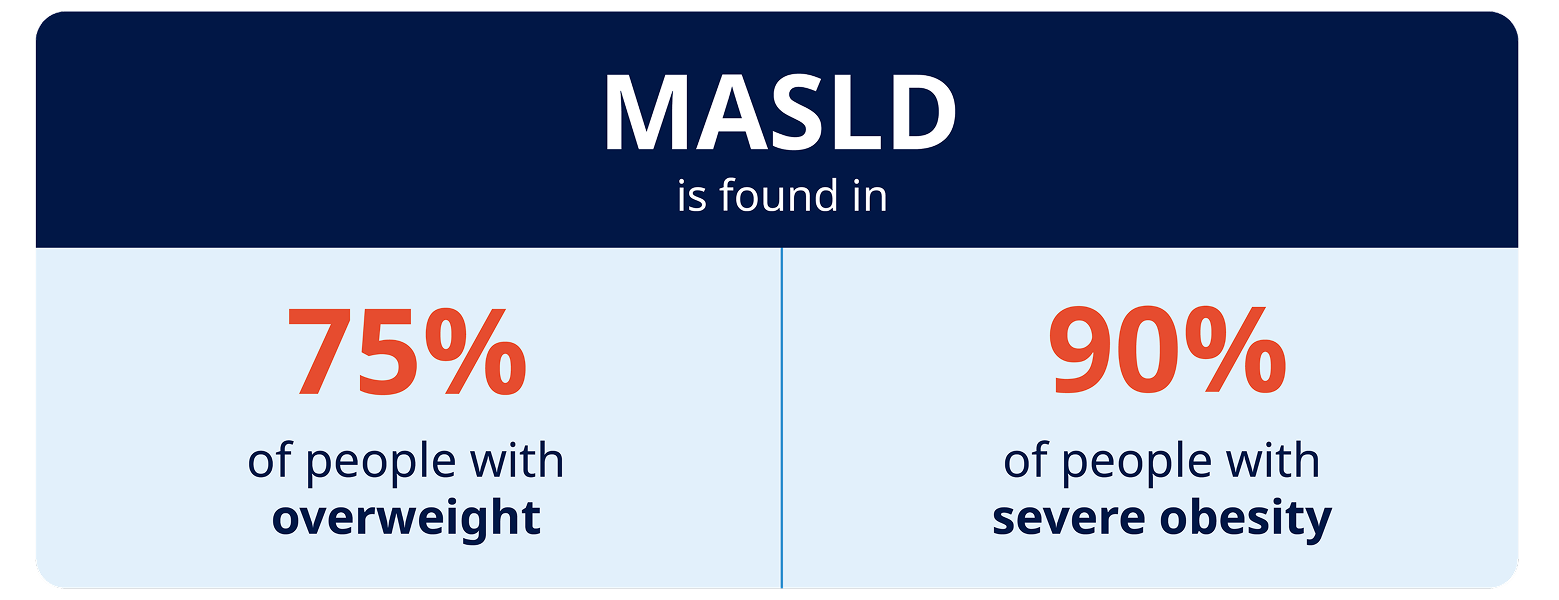
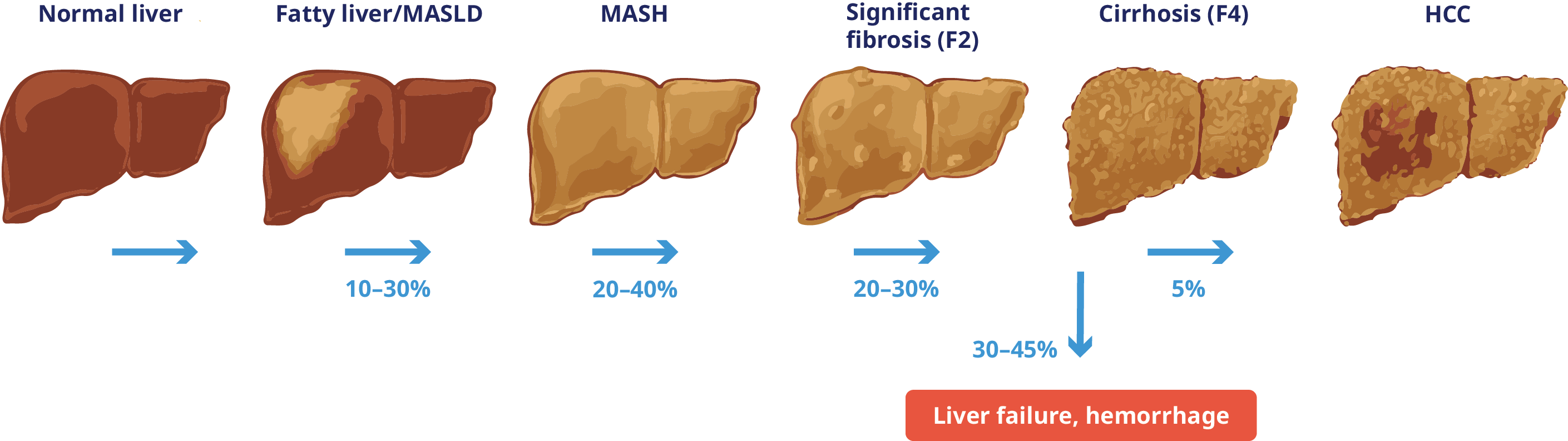
Adapted from Sebastiani G, et al. 2021.
Many people with MASLD feel totally fine at first. But over time, symptoms may include:
Tiredness or weakness
Discomfort in the upper right belly
Nausea or poor appetite
Swelling in hands, feet, or legs
The good news? Fatty liver disease can often be improved or even reversed with healthy lifestyle changes:
Aim for 30+ minutes of exercise most days. Even walking helps.
A Mediterranean-style diet (fruits, veggies, lean protein, healthy fats) supports liver health.
Losing just 5–10% of your body weight can reduce fat in your liver and slow or reverse damage.
Talk to your doctor. If you live with obesity, ask your healthcare provider about checking your liver health, even if you feel fine.